Power Dynamic
Power Dynamic
Last week, I was standing in front of a room full of leaders and I said something I haven’t said before. Which is always a little risky, “Power is one of the most exhausting dynamics most of us navigate every single day.”
The room got quiet, something landed.
“Most of us spend our workday moving through power dynamics,” I continued. “Between us and our manager. Between us and our team. Between us and the person across the table who seems to take up more space than anyone else in the room. We feel it constantly.”
Without saying anything else, I walked to the flip chart.
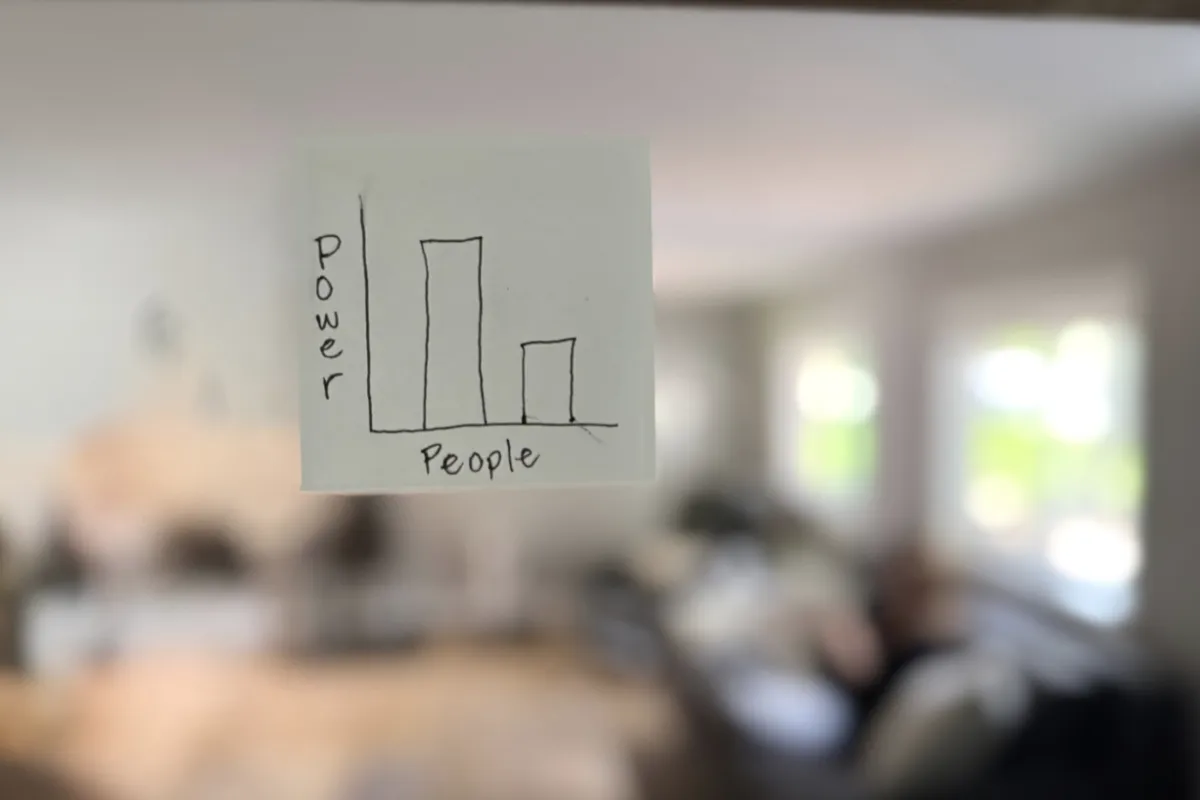
I drew a simple bar graph. Power on the vertical axis. People on the horizontal axis. Two bars side by side. One considerably taller than the other. “This is called power distance.” I said, “The gap between the power you give others and the power you operate from yourself.”
“Most of us think the way to close that gap is to bring the other bar down. Dismiss someone. Minimize them. Find a way to make them smaller in our minds so the distance feels less. It works for a moment. Then you walk in the next morning and the distance is right back where it was.”
Power is never taken. Power is only given.
That's the insight I've been sitting with. Robert Greene is a researcher and author who spent years studying history's most powerful figures and distilling what he found into The 48 Laws of Power. And if you read it, especially today, you quickly realize this isn't about how we wish power worked. It's about how it actually does.
This is not about whether power is right or wrong. It is about whether you are paying attention to the dynamic.
People say they value honesty, collaboration and humility. And they do. But status still matters to us. Perception is still something we worry about. Timing and influence are allusive. And workplace politics is rampant. People who pretend otherwise are not better off, they become easier to sideline.
Understanding power isn't about dominating others. For most of us, it's about learning to stop unconsciously diminishing ourselves.
I went back to the flip chart. I wrote three words.
Self-Awareness. Practice. Influence.
Not because they are new words. Because they are key, and in the right order. You cannot close the power distance by managing others. You close it by understanding yourself well enough to stop giving your power away in the first place.
The room was full of leaders that day. Smart people. Capable people. People who had earned their seat. And almost every one of them had been quietly making themselves smaller without ever realizing it.
Power kept for yourself has a way of becoming manipulative over time. Most people feel it before they can name it. Power developed and given to others is something different entirely. That is leadership. And the power distance you close in yourself is the very distance you open up for the people around you.
Grow in Power:
Start with Self-Awareness
Start noticing where you give your power away.
Pay attention to the moments when you shrink in a room. When you over explain. Stay quiet when you have something meaningful to say. Seek approval from someone whose opinion suddenly feels bigger than your own. Power dynamics are often internal before they are external.
Ask yourself: What story am I telling myself about this person that is making me smaller?
Show Up Differently
Power grows through repetition. You do not become more powerful by thinking differently once. You become more powerful by practicing small moments of courage over time.
Speak earlier in the meeting. Hold eye contact a little longer. Ask the hard question. State your perspective without apologizing for it. Stop over qualifying your ideas. You do not have to dominate the room. Most people who carry healthy power never do. But you do have to practice taking up the space that is already yours.
Confidence is rarely something you feel first. It is something you practice until it becomes true.
Influence Other’s Power
This is where leadership begins. Power held tightly becomes control. Power shared becomes influence. Help others find their voice. Invite quieter people into the conversation. Give ownership instead of answers. Build confidence in the people around you.
Here’s the surprise: The people with the healthiest relationship to power are often the people who no longer need to prove they have it.
DM: POWER to have the initial conversation…