
My client, the COO of a healthcare system, sat in the conference room watching her team unravel. End-of-year deadlines were slipping. Emails piled up. Someone slammed a laptop. Her stomach tightened. Every instinct told her to jump in. Correct. Fix. Solve.
But she didn’t. She paused.
Later, she told me, “James, I don’t know why I paused.” It wasn’t some natural composure. It came from hard-earned practice. From remembering that reacting too quickly only made things worse. From a thousand small moments that had taught her that when she stayed calm, the room could change, and something different might actually happen.
Calm doesn’t just happen. You have to build it.
For me, calm was not something I was born with. It was something I had to grow into, something I had to practice and choose again and again. I grew up with three sisters, and there were plenty of slammed doors and outnumbered moments. As a kid, I had to decide if I was going to match the noise or steady myself. Many times I got it wrong in my immaturity, yet over time I began to understand what it truly meant to choose calm.
Later came my training in firefighting, search and rescue, and other first-responder work. Those roles demanded a presence I had never needed before. You learn fast that panic clouds judgment and makes everything harder. Calm isn’t a personality trait. It’s a trained mind that can stay clear under pressure. Being steady changes the environment, softening the crisis as it unfolds, settling over the chaotic moment.
My work with clients pushed this even further. I have sat in rooms that fell apart right in front of me. I have watched teams slide into conflict, self-protection, and tense moments when people shut down. Every time, as the facilitator, I had to make a choice. I could get swept up in the tension or rise above it. I could react to the emotion in the room or step into calm. I learned to move deliberately, letting my presence settle quietly, staying steady until the room itself began to shift.
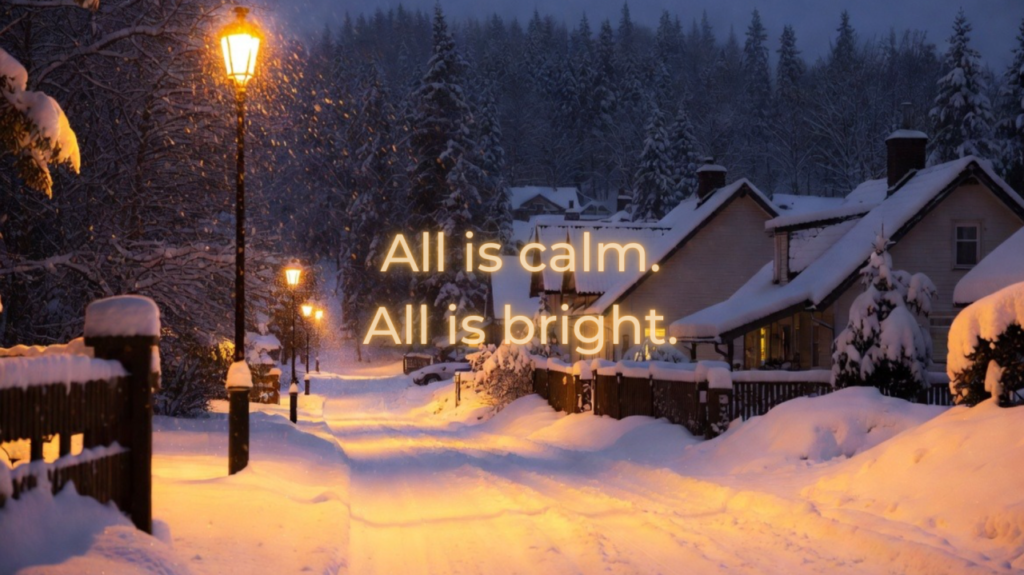
Calm is something I had to develop. I know that sounds easy in theory. It isn’t. I still feel frustration…the tightness shows up in my chest and I can hear my own breath get shallow. But I keep coming back to this picture in my mind; it’s the sound of snow falling on a quiet street with no wind and no traffic. Just the steady hush of snow settling where it lands. That is who I want to be when the pressure shows up.
Calm is the way I want to sound.
Most people think calm is a trait. You either have it or you don’t. That is not how it works. Calm grows in moments that feel like the opposite of calm; chaos, conflict, plans falling apart, feedback that stings, moments when your instinct is to react immediately. That is where calm is developed.
Research supports this. A 2015 study by Thomas Sy at UC Riverside and Daan van Knippenberg at Drexel conducted experimental studies demonstrating that leaders who display controlled composure, and stay calm, showing positive emotions are rated as more effective and influential. Leaders who show frustration or concern are rated as less capable. Calm is not just internal. It is a signal to others and a way to communicate stability and credibility without saying a word.
Calm is visible. People can see it.
- In slower speech.
- In listening instead of interrupting.
- In asking a better question instead of giving a fast answer.
- In staying curious when it would be easier to be defensive.
The leader who steadies themselves steadies the team. You learn this in real team moments, not in theory. Every tense conversation, every meeting that starts to unravel, every surprise crisis becomes a place to practice. The pressure shows you what actually works. The chaos shows you what does not. Each choice to stay steady lands quietly and begins to settle the room, softening the tension until the space itself shifts. Over time, those small moments stack and give you a grounded kind of influence that people can feel.
“Calm changes everything”, we hear that about a lot of things, but the impact of calm is striking. You feel it the moment it shows up. It spreads slowly, like fresh snow settling across a landscape. The noise softens. People stop talking over each other. They notice the person who is steady. They start thinking, because stillness is where clarity begins and decisions stop being driven by emotion. You see, calm is not the absence of stress. Calm is what you practice while the chaos is happening. The more you practice it, the more everyone around you can feel it too.
Think CALM:
C – Choose to Pause: Notice the tension rising. Stop before you react. A single pause can land like soft snow, giving the room a moment to settle.
A – Assess the Situation: Look around. What really matters right now? What needs a response, and what can wait?
L – Listen Deeply: Pay attention to what is said… and what is not. Lean into presence, letting curiosity spread through the space, giving clarity room to surface.
M – Move Intentionally: Act with steadiness. Every word and gesture lands quietly, softening the edges of tension. Your calm spreads, shaping the room without pushing it.
The strange thing is that composure gets built in the smallest moments. For me, it usually shows up in a tight meeting, an email that hits me the wrong way, or a conversation that feels like it could go off track. Those are the places where I actually practice. Not by being perfectly composed and not by pretending I feel calm when I don’t, but by noticing the tension start to rise. You feel it in your chest, your shoulders, your breathing. That is the moment to pause and decide how you want to be calm.
That choice keeps repeating. It stacks. It builds. Over time, staying grounded stops being a quick interruption. Calm becomes part of who you are and the way you lead.