Why Strong Leaders Struggle To Lead Together
Why Strong Leaders Struggle To Lead Together
A few months ago, I was sitting with a Leadership Team during an offsite when one of the leaders said: "I think we all leave meetings with different versions of what just happened."
Nobody argued with him.
For the past five months, my schedule has settled into a strange rhythm. Every other week, another leadership team. Another offsite. Another conference room with cold coffee, partially erased whiteboards, and leaders under lots of pressure.
And in all those different cities, I noticed something.
Most leadership teams are not struggling because they have weak leaders. They have strong leaders doing their jobs, yet struggling to lead together. That is a very different problem.
Capable people. Experienced people. People who know how to run departments, solve problems, and produce results under pressure. But leadership teams rarely fail at the individual level. They fail at the interpretive level.
People leave the same meeting with different definitions of what was decided. Different assumptions about what should change or what actually matters most right now. And because everyone is competent, the misalignment stays hidden longer. That is what makes it dangerous.
I found a leader in the hall during a break who said something I haven't stopped thinking about: "I spend half my time trying to figure out what this team wants from me."
That is not a communication problem. That is an alignment problem. And here is what that costs. Every week that passes without naming it is another week the team learns to work around each other instead of with each other. The issue is not hidden. Everyone already knows. Nobody has just said it out loud yet.
Over time, our work with leadership teams has settled into 4 steps:
1. Leader Interviews
2. Individual Coaching
3. Leadership Retreat
4. Ongoing Leadership Development
Here’s what each of these steps actually looks like. Before we ever walk into a retreat, we start with conversations. One-on-one Leader Interviews with every leader, no agenda other than honesty. What do you actually see right now? What are you not saying when everyone is in the room together? Where does this team need to focus? The patterns that are limiting the team are already known by many of the leaders. This is step 1, giving every leader a voice before the development work begins.
From there, Warrick works with each leader individually. A team cannot build shared clarity until each person on it has found their own. That sounds simple. It is not. This is step 2, Leadership Coaching is getting clear on how you lead before trying to lead together.
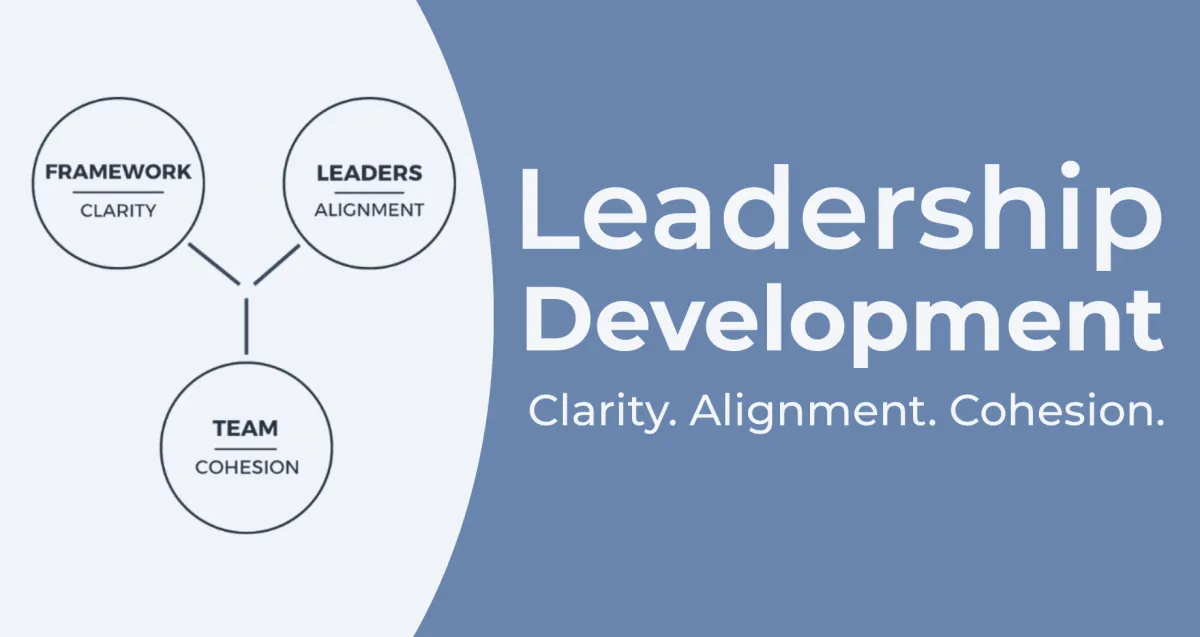
Then the team comes together for a Leadership Retreat. Don’t picture a team-building day, imagine the team actually working together. Naming what matters most and developing ways of working together. And most importantly, building a shared framework. Everyone leaves with clarity, not just their own interpretation of it. This is step 3, a Leadership Retreat where the stated reality and the lived reality finally sit in the same room.
Then we keep going, because a “one and done” doesn’t really work for development. Alignment is not something you achieve, it’s something you practice. Ongoing Coaching continues so leaders can influence each other around shared priorities and the clear framework. This is step 4, and it’s where the Leadership Team becomes what they said they wanted to be.
Those two leaders, the one in the meeting and the one in the hall, have never met. Different organizations, different months, different offsites. But if I put them in the same room they would finish each other's sentences. Misalignment does not care what industry you are in. It shows up the same way every time.
If you recognize your team in any of this, you can stop managing around it.
This is exactly the work we do at Warrick. Reach out today.